Academe and R&D sector to play a crucial role in Philippine’s climate change action

  • Date TBA: No
  • Date Format: Complete date

The academe and the research and development (R&D) sector should have a deeper understanding of the impacts of climate change, especially at the grass roots level which needs guidance most.

This is according to Commissioner Nadarev M. Saño of the Philippine National Climate Change Commission (NCCC) in his presentation during SEARCA’s Agricultural and Development Seminar Series (ADSS) held on 19 April 2011.

Commissioner Saño said that the academe and R&D sector can play a role in helping communities in conducting vulnerability and risk assessments, developing immediate solutions and long term strategies for climate change adaptation and the technologies that may be needed, and educating people on climate change.

According to him, the Philippines has limited knowledge on the impacts of climate change. Thus, it is a big challenge for the academe and the R&D sector to bridge this knowledge gap. He added that the R&D sector can help in knowledge creation and ensuring that the results are disseminated to the sectors that highly need it.

Commisioner Saño also pointed out the importance of the academe and the R&D sector in crafting of the National Climate Change Action Plan (NCCAP).

The NCCAP is created by the Commission to enhance the adaptive capacity of communities, increase the resilience of natural ecosystems, and promote sustainability of the environment amidst climate change.

The Philippines is one of the first countries in the world to develop a climate change action plan.

The National Climate Change road map involves the following components or key results area: food security, water sufficiency, ecosystem and environmental stability, human security, climate-smart industries and services, sustainable energy and climate change knowledge and capacity development.

In crafting the NCCAP, the Commission collaborates with experts in different fields from different sectors including, government agencies, research and development institutions, the academe, and the private and business sectors . Among these, Commissioner Saño emphasized that the academe and R&D sector play the most crucial role in assuring that the commission is guided accordingly, in terms of climate science, when developing rules and policies.

The Commission is the highest climate change-related policy making body in the country. It facilitates the formulation of the action plan which will then be implemented by the local governments.

While all these efforts are being done, Commissioner Saño reminds that addressing the impacts of climate change also involves “economic and societal transformation”. (Cherry Bundalian and Angela Minas)

DISCLAIMER:
The point of view taken by this article is entirely that of the presenter's and does not reflect in any way, SEARCA’s position.


{jcomments on}
Caimpugan community encouraged to play a role in peatland conservation for climate change mitigation

  • Date TBA: No
  • Date Format: Complete date

Caimpugan peatland, like other peatlands in Southeast Asia, serves as significant carbon sink. However, evidences of peatland disturbances caused by human activities can turn it to a carbon source, causing more damage to the environment.

This is according to Ms. Van Leeah Alibo, SEARCA PhD Research Scholar and instructor at Caraga State University, in her presentation during SEARCA’s Agriculture and Development Seminar Series (ADSS) held on 3 May 2011.

Peatlands absorb carbon dioxide from the atmosphere, thus, helping mitigate climate change. When peatlands are not protected and conserved, they can become a carbon source—emitting more carbon dioxide than they absorb.

She said that even though the bulk of peatlands are in the temperate regions, Filipinos and other Southeast Asians should care about peatlands since tropical peatlands store the most significant carbon dioxide as compared to temperate peatlands.

Caimpugan peatland is located within the Agusan Marsh in Northeastern Mindanao. It is one of the six in the Philippines. Unfortunately, Caimpugan peatland is threatened by the activities of the surrounding communities, such as, burning of forest patches, poaching of timber, and converting land for agriculture lead to peatland degradation.

“Since there is little knowledge about peatlands, nobody really cares about peatlands; they are considered waste lands; marginalized,” said Ms. Alibo.

She suggests that, the community should understand the ecosystem where they live since they are the ones who use and benefit from it. The community should also be responsible for conserving the peatland and managing it sustainably.

A soil survey of the Philippines reports that peatlands are called ‘undifferentiated groups of soil’—one of the least concerns of the government.

Ms. Alibo calls for action to help protect peatland ecosystems. Human activities around Caimpugan peatdome should be regulated to keep the ecological integrity of the peatland. This could be beneficial not just for the community surrounding it but also for its climate change mitigation impacts. (Stefhanie Lacbayo and Angela Minas)


DISCLAIMER:
The point of view taken by this article is entirely that of the presenter's and does not reflect in any way, SEARCA’s position.


{jcomments on}

Environmental Leadership in Climate Change Adaptation for Southeast Asia (ELCCA SEA)

  • Date TBA: No
  • Date Format: Complete date

Description

Aims to develop Southeast Asian nationals to play strategic roles in their respective countries toward instituting policies and leading initiatives that primarily focus on CCA in the agriculture and natural resources management sectors.

Intended Participants

Thirty (30) local executives, development planners, technical advisors and researchers who:

  1. display leadership potential; and
  2. are affiliated with a government, non-government or policy-oriented organization that is actively involved in sustainable agriculture, rural development and natural resource management (NRM) at the local/grassroots level.

Date and Venue

6-10 Feb 2012, Maejo University, Chiang Mai, Thailand

Course Fee Live-in rate: US$460.00
Live-out rate: US$440.00
Subsidized live-in rate: US$280.00*
Subsidized live-out rate: US$265.00*

To apply as a fee-paying participant, please fill out the online Application Form.  Application period is from 01 Sep - 13 Dec 2011.
Fellowship grants* Four fellowship grants* are available for this course.
- 3 grants are open to Thai applicants
- 1 grant is open to other Southeast Asian nationals
The grant will cover the grantee’s full participation in the course.
 
To apply for the fellowship grant, please email Ms. Julienne V. Bariuan, SEARCA Training Specialist <This email address is being protected from spambots. You need JavaScript enabled to view it.>.  Application period is from 01 Sep - 30 Nov 2011.

Partner

Economy and Environment Program for Southeast Asia (EEPSEA)

Maejo University (MJU)

For more information

[rokdownload menuitem="119" downloaditem="478" direct_download="true"]ELCCA-SEAcn_2011[/rokdownload]

Contact person

Ms. Julienne V. Bariuan, SEARCA Training Specialist

Email: This email address is being protected from spambots. You need JavaScript enabled to view it. This e-mail address is being protected from spambots. You need JavaScript enabled to view it

Tel. No.: (+63-49) 536-2365 to 67 local 403.

* Available only to employees of government institutions in any of the SEAMEO member countries, i.e., Brunei Darussalam, Cambodia, Indonesia, Lao PDR, Malaysia, Myanmar, Philippines, Singapore, Thailand, Timor Leste and Vietnam.

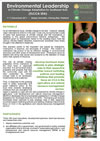
Environmental Leadership in Climate Change Adaptation for Southeast Asia (ELCCA SEA)

  • Date TBA: No
  • Date Format: Complete date

Description

A training that will develop Southeast Asian nationals to play strategic roles in their respective countries toward instituting policies and leading initiatives that primarily focus on CCA in the agriculture and natural resources management sectors.

Intended Participants

Twenty-six (26) development planners, technical advisors and researchers who:

  1. are nationals of Cambodia, Lao PDR, Myanmar, Vietnam and Thailand (Mekong Sub-region);
  2. display leadership potential; and
  3. are affiliated with government, non-government or policy-oriented organization that is actively involved in sustainable agriculture, rural development and natural resource management (NRM) at the local/grassroots level.

Date and Venue

7-11 December 2011, Maejo University, Chiang Mai, Thailand

Partner

Maejo University

Please download for more information

[rokdownload menuitem="119" downloaditem="190" direct_download="false"]ELCCA_SEA[/rokdownload]

Contact person

Ms. Julienne V. Bariuan, Training Specialist
Email: This email address is being protected from spambots. You need JavaScript enabled to view it.
Tel. No.: (+63-49) 536-2365 to 67 local 403.

REDD+ Strategy, necessary in climate mitigation

  • Date TBA: No
  • Date Format: Complete date

{jcomments on}

Climate change can no longer be ignored; the Philippines needs the REDD+ strategy.

This is according to Forester Lourdes Wagan, Chief of the Planning and Project Management Services Division of the Department of Environment and Natural Resources' (DENR) Forest Management Bureau, during SEARCA's Agriculture and Development Seminar Series (ADSS) held on 25 January 2011, where she talked about “The Philippine National REDD+ Strategy”.

Reducing Emissions from Deforestation and Degradation plus conservation, sustainable forest management, and enhancement of forest carbon stocks (REDD+) is a new forest conservation mechanism. It is a measure of providing incentives to developing countries to slow down their rate of deforestation and degradation to reduce green house gas (GHG) emissions.

According to Forester Wagan, deforestation and land use change contributes to 17 percent of the green house gases in the atmosphere. In the Philippines alone, 30 out of 81 provinces experience deforestation. She explained that, in spite of this, a report of the Forest Investment Program (FIP) Expert Group in 2010 reveals that the Philippines has a large carbon mitigation potential amounting to 38.5 megatons of carbon from 2011-2030.

As such, she concurred that the Philippines has a great promise for REDD+ implementation.

The Philippine National REDD+ Strategy (PNRS), according to Forester Wagan, uses a bottom-up, multi-stakeholder approach. Its key components include: an enabling policy, governance, research and development, communication and capacity building, resource use and allocation management, a measuring-reporting-verifying (MRV) system, and sustainable financing.

Furthermore, PNRS envisions empowered forest managers sustainably and equitably managing forestlands and ancestral domains with enhanced carbon stock and reduced GHG emissions. Apart from reducing degradation and deforestation, PNRS impact areas include poverty alleviation, biodiversity conservation and improved governance.

PNRS is a ten-year plan, from 2010-2020. It was approved in July 2010 by the DENR, after a series of workshops, reviews, and consultations.

At present, the PNRS has been forwarded to the Philippine Climate Change Commission to serve as input to the National Climate Change Action Plan, currently being drafted.

Forester Wagan is part of the team that formulated the Philippines National REDD+Strategy. In addition, she helped in formulating the Climate Proofing section of the Forestry Master Plan and the guidelines of DENR's Forestland Boundary Delineation. She also helped implement the Model Forest Project—a ridge-to-rift approach involving multi-stakeholder participation in Sustainable Forest Management. (Angela Mae S. Minas)

Download the handout of the presentation [rokdownload menuitem="132" downloaditem="267" direct_download="true"]here[/rokdownload].

DISCLAIMER:
The point of view taken by this article is entirely that of the presenter's and does not reflect in any way, SEARCA’s position.


Special Report: Millions continue to suffer from climate change

Source: The Philippine Star
24 Mar 2016


MANILA, Philippines – These days in some parts of the Bicol region, hitherto regarded as the country’s typhoon belt, farmers can hardly predict the shift in wet and dry seasons.

In Luzon’s western seaboard, stories of drought abound among those living near Tabtaban Lake in Mindoro Occidental. In 2010, for instance, the area had little rainfall, and the lake dried up.

In northern Mindanao, land tillers in Misamis Oriental now find it difficult to foresee the onset of the dry and wet seasons.

Changing weather patterns have been “scrambling” the country’s calendar, particularly in agriculture.

Several years ago, when “climate change” was an “abstract” idea for ordinary Filipinos, then University of the Philippines Los Baños (UPLB) chancellor Rex Victor Cruz declared at an international science forum in Los Baños: “Climate change is real, it is serious, it is urgent, and it threatens the security and economy of nations, however large or small, wealthy or poor.”

An average of 326 climate-related disasters had been taking place from 2000 to 2004, affecting 262 million people or one in 19 of the world’s population, the United Nations Environment Program-Bureau of Crisis Prevention and Recovery (UNEP-BCPR) reported.

The UNEP-BCPR report was cited in a science conference held recently at the Southeast Asian Regional Center for Graduate Study and Research in Agriculture (SEARCA), based in UPLB.

Devastating typhoons, particularly Yolanda in 2013, showed that the typhoon belt had shifted from its traditional path (Bicol and northern Luzon, particularly Batanes) to the Visayas and outlying areas, according to the analysis of the Climate Change Commission (CCC).

The Intergovernment Panel on Climate Change (IPCC) had also concluded that the manifestations of climate change observed over the years pointed to “increasing air and ocean temperatures, widespread melting of snow and ice, and rising global average sea level,” Cruz said in an international conference held at SEARCA.

Cruz was among the scientists, five of them Filipinos – Jett Villarin, Rosa Perez, Rodel Lasco and Juan Pulhin – who composed the IPCC technical committee. Together with former United States vice president Al Gore Jr., the IPCC won the Nobel Peace Prize in 2007. Gore’s documentary film “An Inconvenient Truth” has generated global interest in the impacts of climate change.

The IPCC was established in 1988 by the World Meteorological Organization (WMO) to build up and disseminate knowledge about climate change and to lay the foundations for measures needed to counteract climate change.

Several global scientific studies have noted that, among other things, the Philippines’ geographic landscape features stand to be considerably altered in light of rising sea levels triggered by the world’s warming temperatures.

By 2020, the country’s average temperature is projected to increase by one degree Celsius. By 2050, the average temperature will be two degrees more than the current normal: 32 degrees Celsius.


Battle at grassroots

Agriculture, which is the most vulnerable to climate change due to its heavy reliance on the weather, “remains to be the backbone of the global economy as it also bears the responsibility of feeding a population that has grown by leaps and bounds while production continues to diminish due to losses in our natural resources,” SEARCA director Gil Saguiguit Jr. said.

He stressed that the battle for climate change “is either won or lost in the grassroots level where localized interventions will play a big role.”

The Los Baños-based International Rice Research Institute (IRRI) has also assessed that for every one degree Celsius increase in temperature, a 15-percent reduction in rice yield follows.

“The impact on rice is simple arithmetic: a three-degree Celsius increase means a 45-percent reduction in rice harvest. That’s a reduction of almost half of what would be available for food,” the CCC said. 

Globally, the impact of climate change will be “most disastrous to the semi-arid tropics, home to two billion people and most of the world’s poor,” former agriculture secretary William Dar once said.


Stronger typhoons

In the Philippines, while the frequency of typhoons remains the same – about 20 a year – five or six of them are now much stronger, reaching wind speeds of 220 kilometers per hour compared to only two or three in previous years.

“And they bring a lot of rains,” the CCC stated as it cited a Philippine Atmospheric, Geophysical and Astronomical Services Administration projection, based on global computer models, that the rainy season will be up to 60 percent wetter than now and the dry season will be 60 percent dryer.

Other studies have also turned out chilling results for Filipinos.

For instance, the International Institute for Environment and Development has estimated that more than 634 million people live in low elevation coastal zones and will be severely affected by climate change. The Philippines is among 10 countries (including China, India, Indonesia, Vietnam, Japan and the United States) with the highest population densities in LECZ.

Another study stated that 81 to 90 percent of Filipinos, now numbering about 104 million, are coastal inhabitants who are also among the country’s “poorest of the poor.”

The IPCC has also projected that 90,000 to 140,000 hectares of coastal land will go under water if the sea rises in the coming decades. Another study has warned that if much of the world’s ice caps melt owing to climate change, at least 171 Philippine coastal towns in 10 vulnerable provinces will go under water.


Training on Climate Change Adaptation for Six ASEAN Countries

  • Date TBA: No
  • Date Format: Complete date

Description

A five-day course for enhancing the capacity of key national and local government planners, researchers, and research managers from six ASEAN countries (Cambodia, Indonesia, the Philippines, Vietnam, Thailand and Laos) in effectively and efficiently planning and implementing climate change adaptation initiatives.

Intended Participants

26-30 participants actively involved in climate change adaptation initiatives/research affecting agriculture and natural resource management (NRM), preferably:

  1. Representatives fromnational climate change program
  2. Commune, district or provincial-level planner
  3. Researchers (i.e., sociologist, economist and climatologist) from R&D institutions and/or state universities and colleges
  4. Local NGO representatives
  5. Project officers facilitating and supporting country initiatives in climate change adaptation

Date and Venue

13-17 September 2010, SEARCA, Los Baños, Laguna, Philippines

Partner

Economy and Environment Program for Southeast Asia (EEPSEA)

Please download for more information

[rokdownload menuitem="119" downloaditem="153" direct_download="true"]CCAtraining[/rokdownload]

Contact person

Ms. Julienne V. Bariuan, Training Specialist

Email: This email address is being protected from spambots. You need JavaScript enabled to view it. This e-mail address is being protected from spambots. You need JavaScript enabled to view it

Tel. No.: (+63-49) 536-2365 to 67 local 403.