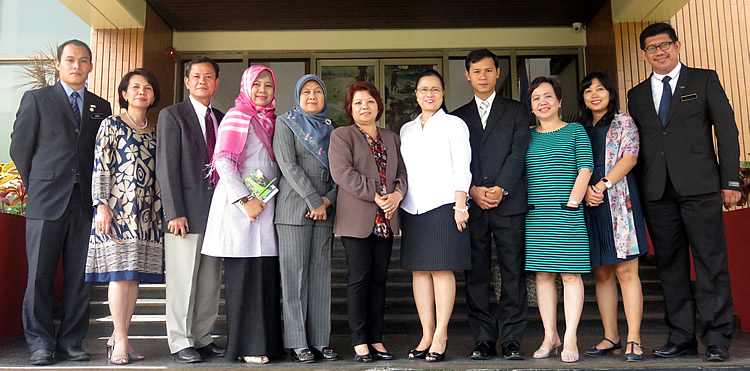
LOS BAÑOS, Philippines – The ASRF Program Steering Committee (ASRF PSC) evaluated the shortlisted proposals under the ASRF Second Call for Proposals and discussed other activities for the remaining 11 months of the program’s pilot phase on 22 January 2015 at SEARCA.
 The ASRF aims to enable the ASEAN Member States (AMS) Focal Points to quickly respond to emerging issues and challenges and articulate policy recommendations and directions on social forestry as it relates to climate change, food security, and poverty alleviation. The ASRF is one of the new initiatives of the ASEAN-Swiss Partnership on Social Forestry and Climate Change (ASFCC) - Phase 2 in support of the ASEAN Social Forestry Network (ASFN). It is currently funded by the Swiss Agency for Development and Cooperation (SDC) with some counterpart resources from SEARCA.
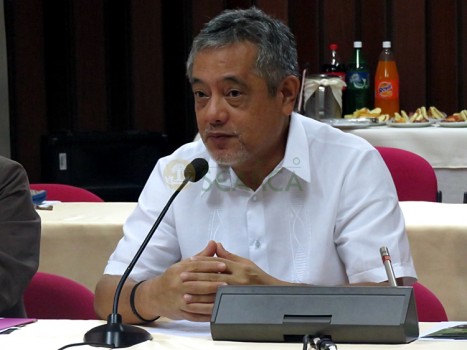
The ASRF Program Management Office under the Research and Development Department of SEARCA and SEARCA’s Internal Review Committee led the grant making process – from call for proposals to compliance and technical review. The final approval of shortlisted proposals was made by the ASRF PSC. The AMS representatives of the environment and forestry sector from Malaysia, Myanmar, Lao PDR, and Indonesia attended the activity. The ASFCC Regional Advisor Dr. Doris Capistrano and the ASFN Secretariat Head Ms. Sagita Arhidani were also present in the meeting. They were welcomed by the SEARCA Director Dr. Gil C. Saguiguit, Jr. He emphasized SEARCA’s commitment to promote sustainable forest resource management in the uplands against the backdrop of climate change and the need to ensure that the survival and livelihood needs of the growing population are met. He acknowledged that the PSC members’ insights and expert advice would greatly contribute to the objective of the ASRF t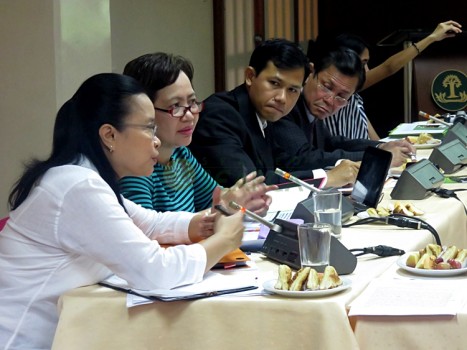 o implement projects that strategically impact on policies in social forestry.
The proposals submitted under the second call came from Indonesia, Cambodia, the Philippines, Vietnam, and Malaysia. The proposed initiatives aim to contribute to strengthening community forestry in the region through the assessment of socio-economic and environmental impacts of community forestry projects; improvement of the management, policy implementation, networks of community forestry; and resource trends assessment and feasibility studies of sustainable harvesting of non-timber forest products. (Mary Ann A. Batas)
{vsig}1954-asean-social-forestry-network-strategic-response-fund-asrf-steering-committee-evaluates-the-asrf-proposals{/vsig}
The ASRF Program Steering Committee (ASRF PSC) evaluated the shortlisted proposals under the ASRF Second Call for Proposals and discussed other activities for the remaining 11 months of the program’s pilot phase on 22 January 2015 at SEARCA.
The ASRF aims to enable the ASEAN Member States (AMS) Focal Points to quickly respond to emerging issues and challenges and articulate policy recommendations and directions on social forestry as it relates to climate change, food security, and poverty alleviation. The ASRF is one of the new initiatives of the ASEAN-Swiss Partnership on Social Forestry and Climate Change (ASFCC) - Phase 2 in support of the ASEAN Social Forestry Network (ASFN). It is currently funded by the Swiss Agency for Development and Cooperation (SDC) with some counterpart resources from SEARCA.
The ASRF Program Management Office under the Research and Development Department of SEARCA and SEARCA’s Internal Review Committee led the grant making process – from call for proposals to compliance and technical review. The final approval of shortlisted proposals was made by the ASRF PSC. The AMS representatives of the environment and forestry sector from Malaysia, Myanmar, Lao PDR, and Indonesia attended the activity. The ASFCC Regional Advisor Dr. Doris Capistrano and the ASFN Secretariat Head Ms. Sagita Arhidani were also present in the meeting. They were welcomed by the SEARCA Director Dr. Gil C. Saguiguit, Jr. He emphasized SEARCA’s commitment to promote sustainable forest resource management in the uplands against the backdrop of climate change and the need to ensure that the survival and livelihood needs of the growing population are met. He acknowledged that the PSC members’ insights and expert advice would greatly contribute to the objective of the ASRF to implement projects that strategically impact on policies in social forestry.
The proposals submitted under the second call came from Indonesia, Cambodia, the Philippines, Vietnam, and Malaysia. The proposed initiatives aim to contribute to strengthening community forestry in the region through the assessment of socio-economic and environmental impacts of community forestry projects; improvement of the management, policy implementation, networks of community forestry; and resource trends assessment and feasibility studies of sustainable harvesting of non-timber forest products. (Mary Ann A. Batas)